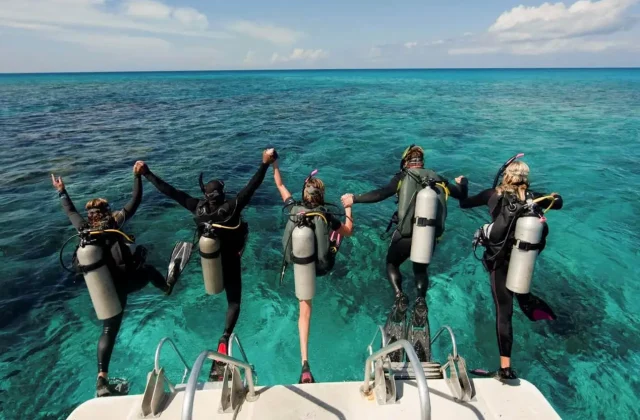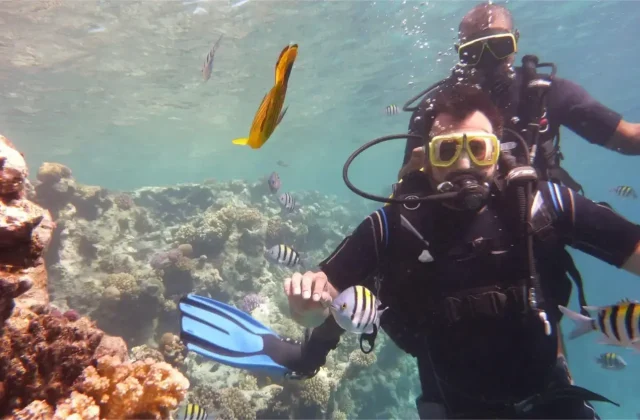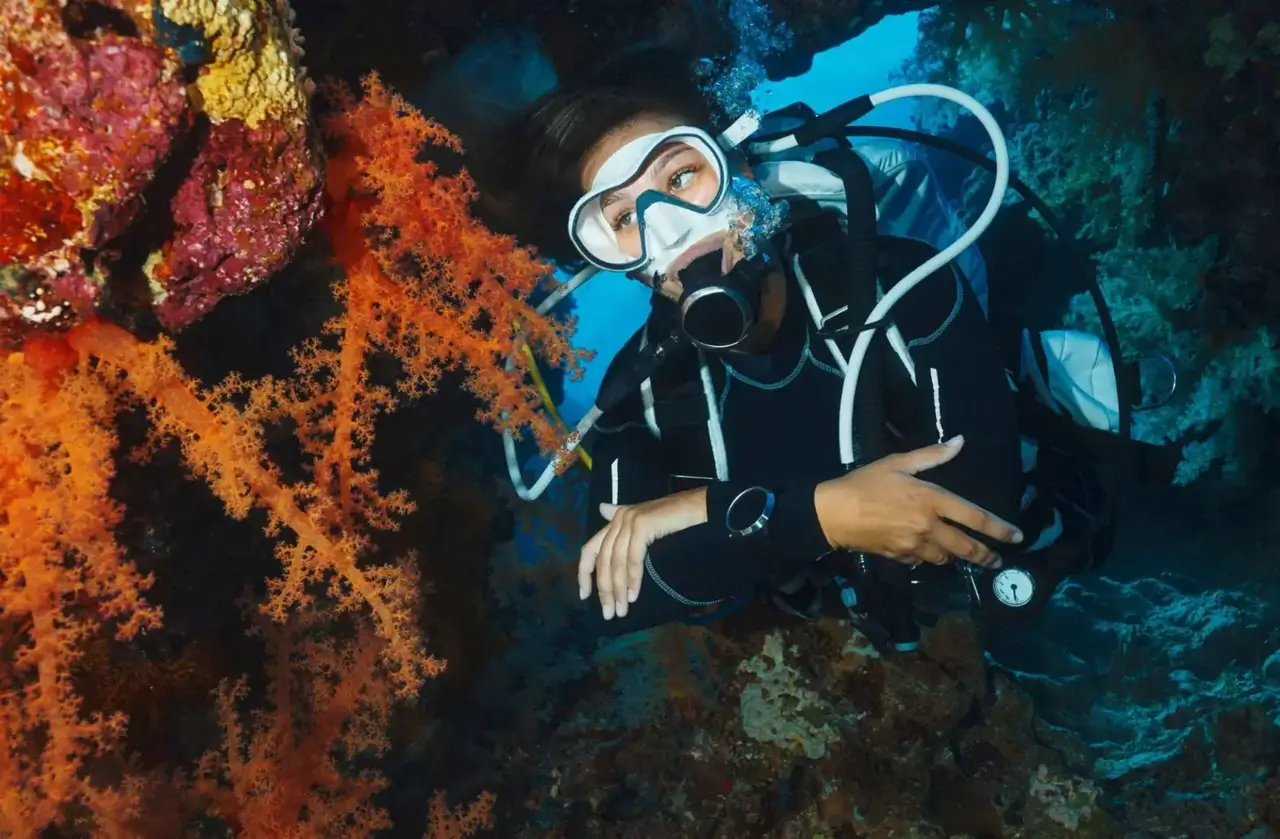
Hurghada has dozens of dive sites within roughly an hour of its marinas, and most of the best ones sit on a ring of islands and offshore reefs: the Giftun Islands and nearby Abu Ramada east of the city, and El Fanadir, Carless Reef and Shaab El Erg to the north. This guide covers the best dive sites in Hurghada that day boats actually visit, what each one is like, and which suit beginners or experienced divers.
One rule before the list: no operator can promise a site in advance. Captains choose each morning according to wind, current and the group's level. Treat this as a menu, not a fixed timetable.
Giftun Islands: walls, drifts and coral gardens
Big and Small Giftun are the closest major islands to Hurghada and the backbone of local day diving. The sheltered western sides have coral gardens and sandy patches for easy dives and snorkeling; the eastern and northern sides drop into walls.
Small Giftun
A wall dive usually done as a drift, with the most comfortable depths at around 27–30 m along the deep wall. Gorgonian fans and coral outcrops stick out from the wall, and tuna, barracuda, jacks and groupers patrol the blue. Because of the depth and current it suits intermediate and advanced divers.
Hamda (North Giftun)
A rugged wall on the north side of Big Giftun with moray eels, groupers and tuna, and plenty of coral variety. Good for divers comfortable with a wall and some current.
Erg Somaya and Banana Reef
Erg Somaya is known for its coral towers: one rising from about 30 m covered in soft corals, and a shallower one at around 10 m swarming with anthias. Banana Reef, between Big and Small Giftun, is an open reef where eagle rays are sometimes seen.
Giftun is also where Orange Bay sits, which is why our full-day diving trip can finish with an island stop there when conditions allow.
Abu Ramada and Gota Abu Ramada
Abu Ramada island has terraced plateaus, a small cave at around 20 m, garden eels on the sand and schools of Red Sea anthias. The nearby coral tower of Gota Abu Ramada, often nicknamed "The Aquarium", sits on a plateau at about 12–14 m and is packed with reef fish. Both are suitable for all levels, which makes them common choices for a relaxed second dive.
El Fanadir
About an hour north of central Hurghada, El Fanadir is a long sloping reef wall with a shallow, protected lagoon behind it. The drop-off starts at around 20–25 m, but most of the interest is shallower: scorpionfish, stonefish, lionfish, moray eels, blue-spotted rays and the occasional octopus hiding in the cracks. A prominent coral block works as a cleaning station.
The lagoon makes El Fanadir a good site for beginners and training dives, while macro fans and night divers love it too.
Carless Reef
Roughly an hour north-east of Hurghada, Carless (sometimes spelled Careless) Reef is two large pinnacles rising from a coral plateau at 12–17 m, with a drop to 20–25 m. It's famous for its moray eels, which became unusually diver-friendly after years of fish feeding in the past. Groupers, giant trevallies, turtles and tuna are regulars.
The catch: the reef is exposed, has no protective mooring, and the currents are unpredictable. It's dived only in calm weather and by divers with some experience, so it isn't on the menu every day.
Shaab El Erg (Dolphin House)
A large horseshoe-shaped reef roughly halfway between Hurghada and El Gouna, with several sites around it, including Dolphin House, Gota Shaab El Erg and Manta Point. Inside the horseshoe it's calm enough for orientation dives; outside you'll find Napoleon wrasse, blue-spotted rays, crocodilefish, scorpionfish and turtles, with manta rays possible in season.
Bottlenose dolphins use the channel into the lagoon, especially around dawn and dusk, and sometimes join dives. They're wild animals and sightings are never guaranteed. If they come close, we keep our distance: no touching, feeding or chasing. If dolphins are your main goal, our Dolphin House snorkeling trip is built around this reef.
More reefs worth knowing
- Umm Gamar – a steep wall and caves around 28 m; whitetip reef sharks patrol it, and it's better suited to experienced divers.
- Magawish – a shallow site at around 10 m with anemones and clownfish and stingrays on the sand; easy and good for beginners.
- El Mina wreck – an Egyptian Navy minesweeper lying on its side near Hurghada harbour, with the bow at about 26 m and the stern at about 33 m. It's now home to glassfish hunted by lionfish and jacks. Because of the depth it is an advanced dive.
Further afield: the wrecks of Abu Nuhas and the Thistlegorm
Hurghada is also a launch point for the northern Red Sea's famous wrecks. Abu Nuhas reef, north of Shadwan Island, has claimed four ships, the Giannis D (sunk 1983), the Carnatic, the Chrisoula K and the Kimon M, all now covered in coral and home to groupers, batfish and glassfish. It sits about 3–4 hours' sailing from Hurghada, though, so it's usually reached on a liveaboard rather than a standard day trip.
The same goes for the SS Thistlegorm, the WWII cargo ship that is the best-known wreck in the Red Sea, and the offshore reefs of the Brothers, Daedalus and Elphinstone. If those are on your list, look at our Red Sea diving safari.
Which Hurghada dive sites suit your level?
Beginners and try-divers suit Magawish, the El Fanadir lagoon, Gota Abu Ramada and inner Shaab El Erg. Open Water divers suit Abu Ramada and the Giftun coral gardens, and experienced divers suit Small Giftun, Carless Reef, Umm Gamar and the El Mina wreck. Depth, current and exposure decide the match.
| Level | Good sites | Why |
|---|---|---|
| Beginners / try dive | Magawish, El Fanadir lagoon, Gota Abu Ramada, inner Shaab El Erg | Shallow, sheltered, lots of fish at 10–14 m |
| Open Water divers | Abu Ramada, Giftun coral gardens, Erg Somaya (shallow tower), Shaab El Erg | Easy navigation, moderate depth |
| Experienced divers | Small Giftun drift, Carless Reef, Umm Gamar, El Mina wreck | Depth, current or exposure |
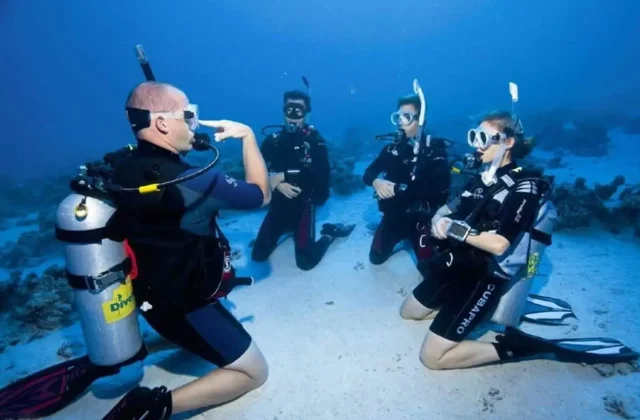
Never dived? Under PADI's Discover Scuba Diving standards you can try diving from age 10 with an instructor, to a maximum of 12 m in open water. If you'd like to go further, our PADI Open Water course certifies you to dive these reefs with a buddy.
When is the best time to dive Hurghada's top sites?
You can dive Hurghada all year, but spring and autumn are best, with warm water and visibility commonly 20–40 m. The sea averages about 22 °C in February–March and about 29 °C in August. Winter wind can keep exposed sites like Carless Reef off the schedule, so boats use sheltered reefs instead.
Diving runs all year. The water averages about 22 °C in February–March and about 29 °C in August, and visibility is commonly 20–40 m. Spring and autumn bring warm water and good visibility; winter brings more wind, which can keep exposed sites like Carless Reef off the schedule, so the boat heads for sheltered reefs instead.
The easiest way to see two of these sites in one day is our full-day diving trip for €60, with equipment, lunch and transfers included. Want your own plan? Book a private diving trip and tell us which sites you'd like to see. For all options, see Diving in Hurghada.
FAQ
What is the best dive site in Hurghada?
It depends on your level. Experienced divers often rate Carless Reef for its moray eels and the Small Giftun drift for big fish. For relaxed, fish-packed dives, Gota Abu Ramada and El Fanadir are favourites. Captains choose sites each morning by weather, so a good day boat will pick the best option for that day.
Which Hurghada dive sites are good for beginners?
Shallow, sheltered sites such as Magawish (around 10 m), the El Fanadir lagoon, Gota Abu Ramada (plateau at about 12–14 m) and the inside of Shaab El Erg are commonly used for beginners and try dives. Exposed or deep sites like Carless Reef, Small Giftun and the El Mina wreck are for experienced divers.
Can you dive the Abu Nuhas wrecks from Hurghada?
Yes, but usually not on a standard day trip. Abu Nuhas lies north of Shadwan Island, about 3–4 hours' sailing from Hurghada, and its four wrecks (Giannis D, Carnatic, Chrisoula K, Kimon M) are typically dived on northern Red Sea liveaboards that depart from Hurghada.
Is there a wreck dive close to Hurghada?
Yes. The El Mina wreck, an Egyptian Navy minesweeper, lies near Hurghada harbour on its side, with the bow at about 26 m and the stern at about 33 m. It's covered in glassfish and visited by lionfish and jacks. Because of the depth it's an advanced dive.
Where can you see dolphins while diving in Hurghada?
Shaab El Erg, a horseshoe reef north of Hurghada also known as Dolphin House, is where bottlenose dolphins are most often seen, especially around dawn and dusk. They're wild, so sightings are never guaranteed, and divers should never touch, feed or chase them.
How deep are the dive sites in Hurghada?
Many popular sites have plateaus and coral gardens at 10–18 m, ideal for most recreational divers. Walls such as Small Giftun go much deeper, with typical dive depths around 27–30 m, and the El Mina wreck lies at about 26–33 m. Your guide plans the depth around your certification.
Keep planning your Red Sea days
New to diving? See our PADI courses in Hurghada, including the Advanced Open Water course for deeper sites. Not diving every day? Compare snorkeling and island trips or private boat trips, then read our local guide to things to do in Hurghada. All guides are listed on the guides page, and you can request a booking any time.