Is Dolphin House in Hurghada ethical?
Is Dolphin House Hurghada ethical? It can be, but only when the boat follows the rules. Dolphin House is a resting area for wild dolphins, and HEPCA, the Hurghada Environmental Protection and Conservation Association, publishes a code of conduct for it. A trip is ethical when the captain keeps distance, never chases and never promises contact.
The honest answer is conditional. The dolphins are not captive and nobody controls them. What you control is which operator you choose and how you behave in the water.
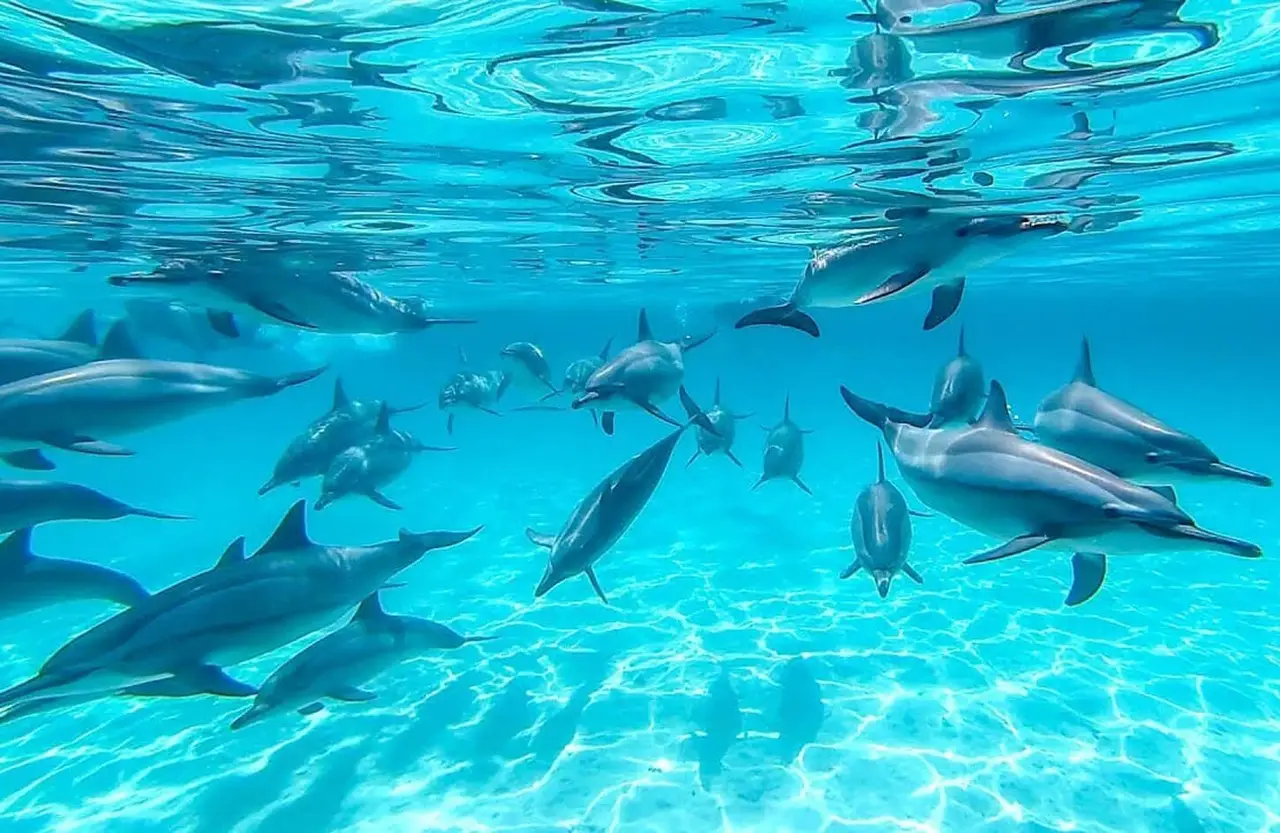
What is Dolphin House and why do dolphins rest there?
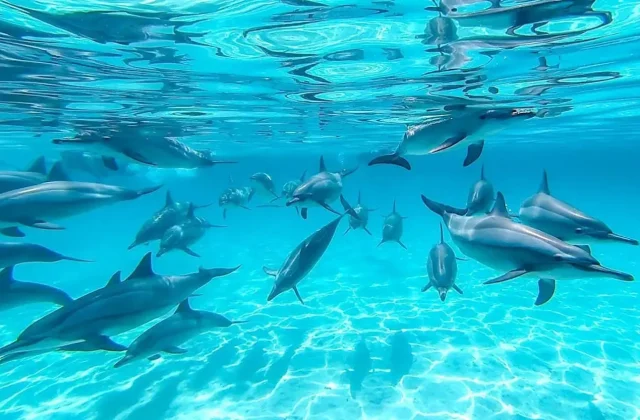
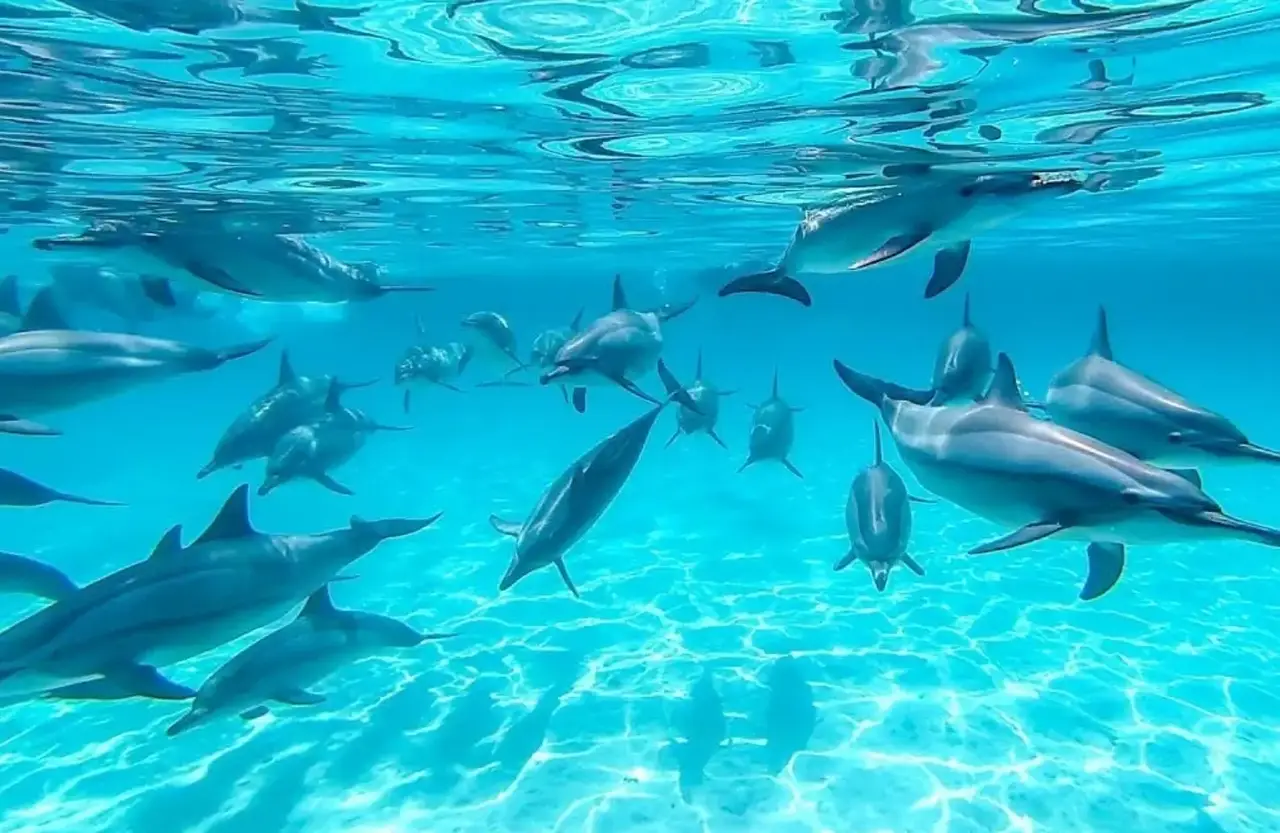
Dolphin House is the local nickname for Shaab El Erg, a reef north of Hurghada. According to HEPCA's 2018 mooring page, dolphins use Fanous, Shaab El Erg and Abu Nugar mainly to rest. That is why a visit there is different from a normal snorkel stop.
Resting matters because a dolphin that is disturbed again and again cannot recover. We do not quote a study on the effect here, because we did not open one. What HEPCA's own pages show is that the authorities treated the problem as serious enough to regulate.
- On January 30, 2012 the Governor of the Red Sea declared part of Fanous Reef a safe zone, with entrance and navigation prohibited (HEPCA).
- Shaab El Erg and Shaab Fanous were reopened on June 16, 2013 under a code of conduct (HEPCA).
- In 2017 HEPCA, the Red Sea Protectorates and the Red Sea Governorate proposed a management plan; its main feature is limiting daily visitors to each site's carrying capacity (HEPCA, July 27, 2017).
What does the HEPCA dolphin code of conduct require?
HEPCA's code tells boat captains to keep at least 30 m from dolphins, travel at 4 knots (7 km/h) or less, and never follow dolphins into lagoons and resting areas such as Shaab El Erg. Swimmers must wear fins, mask, snorkel and a lifejacket, and must never touch or chase.
The table below lists what we saw on hepca.org on October 5, 2026. Quotes are HEPCA's wording.
| Who | Rule on HEPCA's page |
|---|---|
| Boat captain | "Always maintain a clearance distance of minimum 30m from the dolphins" |
| Boat captain | "drive slowly at a maximum speed of 4 knots or 7km/h or adjust to speed of the slowest dolphin" |
| Boat captain | "If dolphins approach your vessel, put your engine in neutral" |
| Boat captain | "NEVER follow dolphins inside lagoons and rest areas" |
| Boat captain | "NEVER herd, chase, encircle or separate dolphin groups" |
| Boat captain | "Avoid noises. Do not shout, whistle, use horns or play music"; extra care when calves are present |
| Swimmer | "All swimmers MUST wear fins, mask, snorkel and a lifejacket" |
| Swimmer | "touching dolphins is strictly forbidden"; "DO NOT chase dolphins"; "NEVER feed the animals" |
| Swimmer | Scooters near dolphins are "strictly forbidden" |
What is the fine?
HEPCA's June 16, 2013 page states that non-respect of the code "will be punished with a fine of 10,000 L.E." HEPCA's current code page says only that non-compliance is "punishable by law and with a fine", with no amount. Treat the 2013 figure as historical and check the current amount with HEPCA.
What must swimmers never do at Dolphin House?
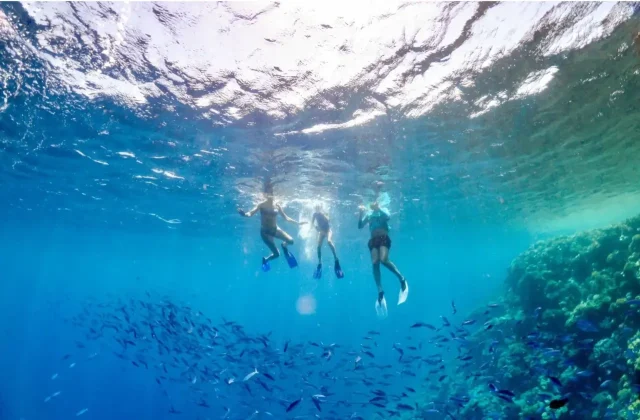
Swimmers must never touch, chase, feed or surround dolphins, never use scooters near them and never throw trash in the water, according to HEPCA's code of conduct. A good guide adds common sense: enter quietly, stay calm at the surface and let the dolphins choose whether to come close.
- Do not swim toward dolphins or try to reach them.
- Do not touch, even if a dolphin passes close.
- Do not feed anything to any animal.
- Wear the lifejacket, mask, snorkel and fins the code requires.
- Leave the reef alone: no standing on coral.
How do you choose a responsible Dolphin House operator?
Ask direct questions before you pay. A responsible operator can name the HEPCA code, tell you what the captain does when dolphins appear, and admit that sightings are not guaranteed. Vague answers, guaranteed-dolphin promises or "swim with them" selling points are warning signs.
A checklist to ask any operator
- Do you follow HEPCA's code of conduct, including the 30 m clearance and 4-knot limit?
- What does the captain do if boats crowd around the dolphins?
- Do you ever enter the lagoon or resting area while chasing dolphins?
- Do you promise a sighting, a swim or contact? (The answer should be no.)
- Are lifejackets, mask, snorkel and fins used by every swimmer in the water?
- What happens to the day if there are no dolphins?
- Is the guide in the water and giving clear instructions?
Are dolphins guaranteed at Dolphin House?
No. Dolphins are wild and move freely, so no honest operator can guarantee a sighting or a swim. Shaab El Erg is a known resting area, which makes sightings possible, not certain. Be wary of any percentage quoted without a source; we found none on HEPCA's pages.
The trip still works as a snorkeling day. We plan it as snorkeling with a possible bonus, not as a dolphin show.
What is the best time to see dolphins at Dolphin House?
We cannot give a verified best month or hour. HEPCA's pages say dolphins use Shaab El Erg mainly to rest, but none of the pages we opened gives season or time-of-day statistics. Operators quote their own numbers, which are anecdotal. Ask any operator for the evidence behind a claim.
How does Divers Trips handle this?
Our Dolphin House snorkeling trip costs €45 per person. It includes hotel pickup and drop-off in Hurghada, the boat, snorkeling stops with equipment, a professional snorkeling guide, lunch on board, soft drinks and water activities per the daily program.
Our trip data states that dolphins are wild and not guaranteed, that the crew follows local marine-life guidelines, and that guests must never touch, feed or chase dolphins. Environmental or marine fees may be charged separately; we confirm any fee after booking. Child rates depend on age, so contact us first.
What are the alternatives?
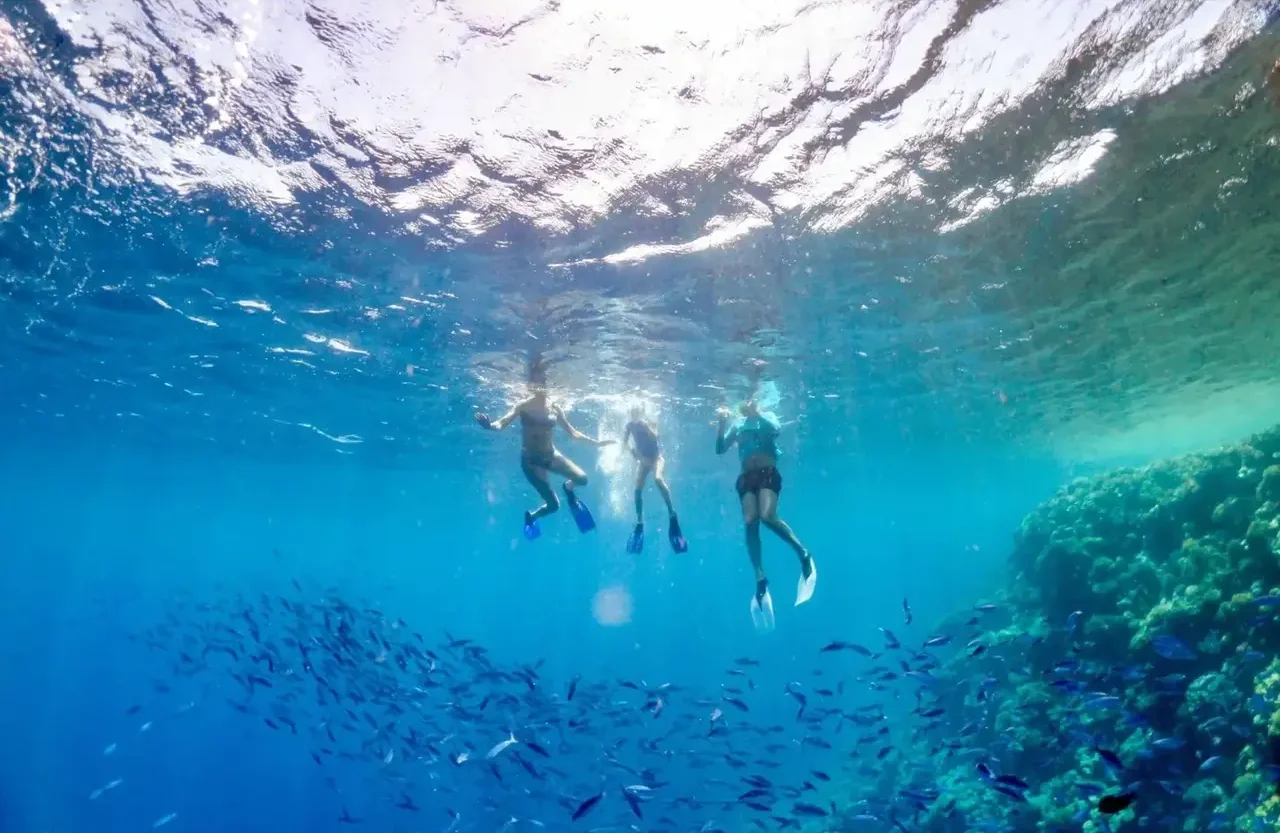
If you want a day without a dolphin gamble, choose a reef-focused trip. Our snorkeling trip and Giftun Island trip each cost €45 per person. For help choosing between island stops, read which island trip is best, or see all snorkeling and sea trips. You can book online or check the FAQ.
Sources
- HEPCA: Dolphin code of conduct
- HEPCA: Code of conduct for dolphin encounters (June 16, 2013)
- HEPCA: Sha'ab El Erg mooring maintenance (March 13, 2018)
- HEPCA: Management plan for Shaab El Erg and Fanous (July 27, 2017)
- HEPCA: Egyptian dolphin sanctuaries on the rise (January 30, 2012)
Facts last verified: