What is the water temperature in Hurghada each month?
Hurghada's sea is coolest in February and March at about 22 °C and warmest in August at about 29 °C. According to seatemperature.info, which averages ten years of satellite and in-situ data, it stays above 20 °C in every month. From June to November the average is above 26 °C.
| Month | Sea °C: average (min-max) | Visibility reported by operators | Wind and sea state | Wetsuit guidance |
|---|---|---|---|---|
| January | 23.1 (21.7-25.1) | 20-30 m | Some northwesterly wind days; sheltered sites used | 5 mm; hood if you chill easily |
| February | 22.4 (20.7-24.4) | 20-30 m; shallow sites can exceed 40 m | Some northwesterly wind days | 5 mm plus hood |
| March | 22.3 (20.8-24.4) | 25-30+ m | Lighter, more predictable wind | 5 mm |
| April | 23.1 (21.5-25.9) | 25-30+ m | Light wind, smoother boat rides | 5 mm, or 3 mm if you run warm |
| May | 24.9 (22.5-27.4) | 25-30+ m | Light wind | 3 mm |
| June | 26.6 (24.6-29.2) | 20-40 m (sources disagree) | Northerly wind persists | 3 mm or shorty |
| July | 28.3 (25.7-30.9) | 20-40 m (sources disagree) | Northerly wind persists | 1-3 mm, shorty or rash guard |
| August | 29.1 (27.3-31.2) | 20-40 m (sources disagree) | Northerly wind persists | 1-3 mm, shorty or rash guard |
| September | 28.1 (25.7-30.2) | 20-40 m (sources disagree) | Windiest month at the airport | 1-3 mm, shorty or rash guard |
| October | 27.4 (25.7-29.5) | 25-35 m | Winds ease | 3 mm |
| November | 26.3 (23.7-28.7) | 25-35 m | Calmest month at the airport; windy spells possible | 3 mm |
| December | 24.6 (22.7-27.2) | 20-35 m | Winter wind days begin | 5 mm plus hood (dive-red.com) |
Temperatures are seatemperature.info averages. Visibility figures are operator reports from dive-red.com and divingaround.com, not measurements. Wind notes come from WeatherSpark, dive-red.com and ascubadiver.com. Wetsuit guidance is typical advice; cold tolerance varies by person.
What is the best month for diving in Hurghada?
There is no single best month. April-May and October-November combine 23-27 °C water, reported visibility of 25-35 m and lighter wind, based on the data above. Winter suits divers who accept a thicker suit. Summer suits those who want the warmest water.
Operators also report prices. According to dive-red.com, prices peak in June-August and December to early January, and autumn is 20-30% cheaper than summer. That is an operator claim, not a price list. Divingaround.com advises photographers to favour March-June and September-November.
Do I need a wetsuit in winter?
Yes. From December to March the sea averages 22-25 °C, and most divers wear a 5 mm wetsuit. Dive-red.com recommends 5 mm plus a hood from December to February. Ascubadiver.com suggests up to 7 mm if you feel the cold.
A wetsuit is a neoprene suit that traps a thin layer of water warmed by your body. The number is its thickness in millimetres. Thicker means warmer but heavier. You also lose heat on the boat ride back in wind, so bring a windproof layer and a towel.
Divingaround.com says 3 mm is sufficient for most of the year. That holds for May-November, not for February on a full-day boat trip.
When is underwater visibility best?
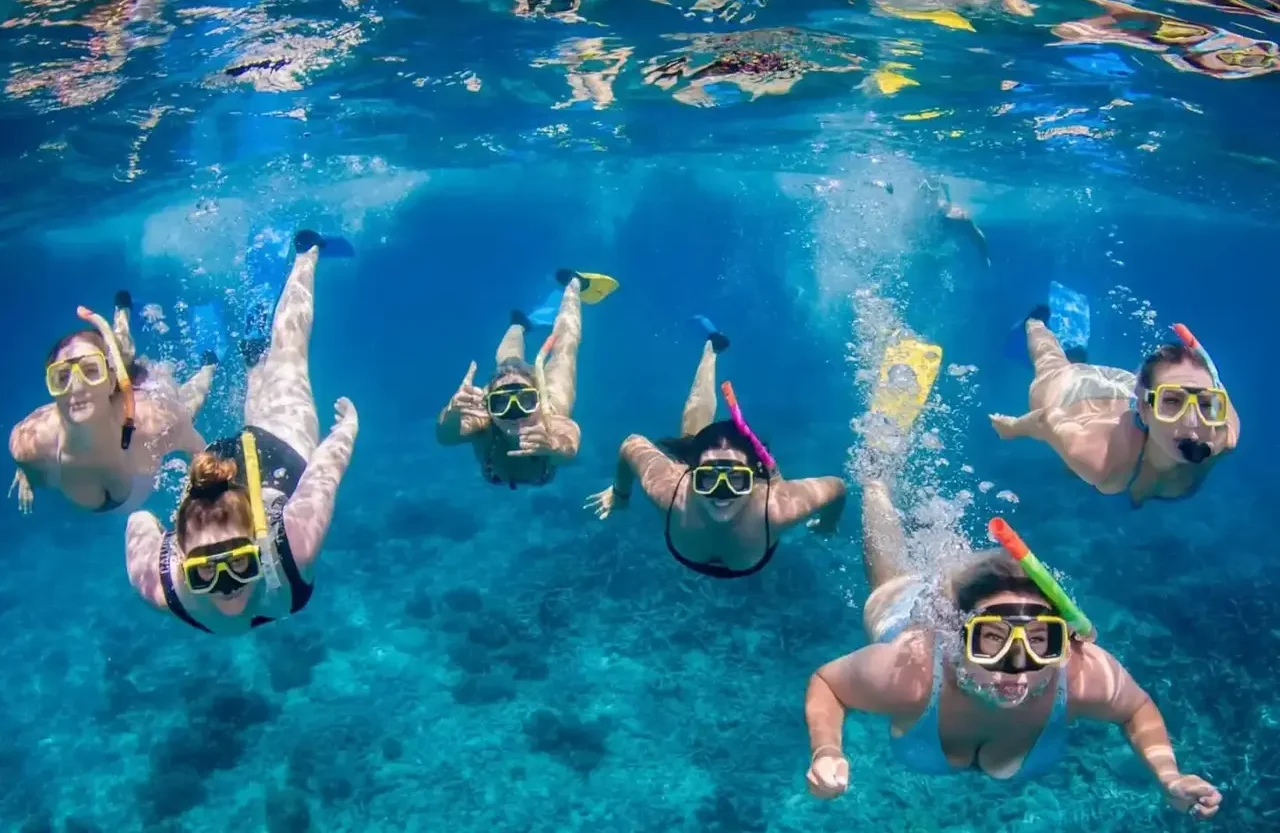
Operators report visibility of roughly 20-40 m through the year, and no independent dataset exists for it. Dive-red.com reports 25-30+ m in spring and 30+ m in autumn. Divingaround.com reports 30+ m in March-April. The two disagree about summer.
Visibility is how far you can see horizontally underwater. Dive-red.com reports that shallow winter sites can exceed 40 m. Treat any single number as a range, and remember that visibility also changes by site and by day.

Can I dive in Hurghada in summer?
Yes. July-September has the warmest sea of the year, 28-29 °C on average according to seatemperature.info, so a 1-3 mm suit or rash guard is enough. The trade-offs are heat and crowds. WeatherSpark gives average daytime highs of about 96 °F (35 °C) in July and August.
Boat decks have shade, but bring a hat, sunscreen and water. Dive-red.com reports peak crowds and higher prices in June-August.
What wind and sea conditions change a dive day?
Wind, not water temperature, decides most schedule changes. Hurghada's wind blows from the north through the year. According to Windfinder, the airport averages 12 knots from the north-northwest, with gusts around 22 knots. The captain and guide make the final call.
WeatherSpark lists September as the windiest month and November as the calmest, using airport data, which is inland from the reefs. Dive-red.com and ascubadiver.com both note that winter northwesterly wind can make boat rides choppy. We keep exposed sites such as Carless Reef for calm days and move to sheltered reefs when wind rises.
What marine life can you expect to see?
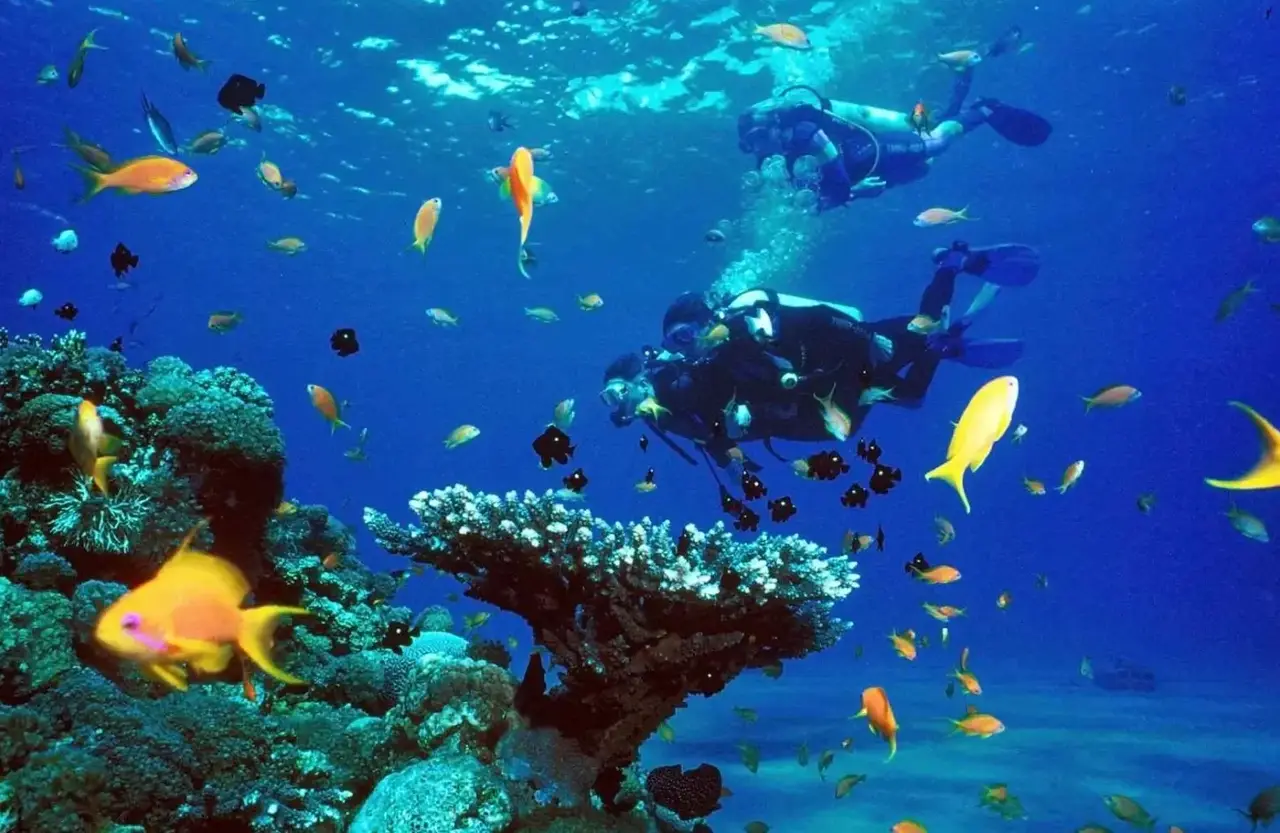
Reef life is present year-round: corals, anthias, parrotfish, butterflyfish, moray eels, lionfish and blue-spotted rays. Turtles and dolphins are a bonus, never a promise. Wildlife is never guaranteed on any month, so we do not promise any seasonal species on a dive day.
Operator pages disagree about seasons. Dive-red.com lists mantas in spring and whale sharks in autumn. Divingaround.com lists tuna, jacks and reef sharks in autumn. Neither is a day-boat guarantee from Hurghada. See our guide to the best dive sites in Hurghada for site detail.
Which months suit beginners and PADI courses?
Any month works. Divingaround.com calls March-April ideal for beginners because of calm seas, but winter learners simply want a thicker suit and summer learners hardly notice the water. The PADI Open Water course has a minimum age of 10, according to PADI.
PADI says beginning divers stay shallower than about 18 m, and popular dives often stay under 12 m. See our PADI courses in Hurghada and the PADI Open Water course.
Divers who fly: how should you plan your dates?
Plan your last dive around your flight home. According to DAN, a single no-decompression dive needs a minimum preflight surface interval of 12 hours. Multiple dives per day, or several days of diving, need 18 hours. For a diving holiday, 18 hours is the working figure.
- Preflight surface interval is the time between your last dive and boarding a flight.
- For decompression dives, DAN says a much longer wait “appears prudent”.
- DAN notes these intervals do not guarantee you avoid decompression sickness.
Example: with a 12:00 flight, your last dive must end before 18:00 the day before. A full-day boat trip may return later than you expect, so we confirm the return time at booking. Because wind can reshuffle a schedule, avoid making your only dive day the last one before your flight. This is general information, not medical advice. Ask your instructor about your own dive profile.
For snorkelers there is no such wait. A snorkeling trip is a good last-day option.
How does Divers Trips handle this?
Our full-day diving trip costs €60 per person and runs all year, and everything listed below is part of that price. It includes hotel pickup and drop-off, two guided dives, equipment, tanks and weights, a snorkeling stop, lunch and soft drinks.
Sites are chosen on the day for weather and sea conditions. Pickup time is confirmed after booking. Separate environmental or park fees may apply; we confirm any fee after booking. Tell us your height and shoe size, and ask about wetsuit thickness for your month.
The PADI Open Water course price is on request. It depends on the package, such as eLearning, equipment and transfers. Non-divers can join the snorkeling trip at €45 per person. Browse our diving in Hurghada page, then book online or contact us.
Sources
- Hurghada monthly sea temperature (seatemperature.info)
- Best Time to Dive Hurghada (dive-red.com)
- Diving in Hurghada: The Ultimate Guide (ascubadiver.com)
- Diving in Hurghada: Dive Sites, Courses and Complete Guide (divingaround.com)
- Average weather in Hurghada (WeatherSpark)
- Hurghada Airport wind statistics (Windfinder)
- Flying After Diving (DAN Europe, AlertDiver)
- PADI scuba certification FAQ
Facts last verified: