This guide explains how long to wait to fly after diving, in plain language, for a Hurghada holiday. It is general information, not medical advice. Ask a physician or your dive professional when in doubt.
How long should you wait to fly after diving?
According to the Divers Alert Network (DAN), wait at least 12 hours after a single no-decompression dive and at least 18 hours after multiple dives in a day or diving on several days. After decompression dives, DAN says a wait substantially longer than 18 hours appears prudent. PADI suggests 24 hours as a general buffer.
The wait is called the preflight surface interval. It is the time between the end of your last dive and the departure of your flight. DAN also warns that these intervals do not guarantee you will avoid decompression sickness (DCS).
| Your dive pattern | Minimum wait before flying (DAN) | Cautious buffer |
|---|---|---|
| One no-decompression dive in a day | 12 hours | PADI: 24 hours after any type of diving |
| Several dives in a day, or diving on several days | 18 hours | PADI: 24 hours |
| Decompression dives | Substantially longer than 18 hours | PADI: at least 24 hours |
Sources: DAN guidelines (dan.org) and the DAN Europe Alert Diver article. The 24-hour figures come from PADI's blog. A DAN article on a 2015 study (dan.org) reports that no bubbles were detected before takeoff when the last dive ended 24 hours earlier.
What counts as a single dive, multiple dives and multiple days?
DAN's Alert Diver article defines a single dive as one no-decompression dive in a day. Multiple dives means repetitive dives within one day, or diving across several days. A no-decompression dive is a dive you can finish by ascending straight to the surface without mandatory decompression stops.
What this means on a Hurghada holiday
- Our two-dive boat day counts as multiple dives, so the 18-hour minimum applies.
- One dive on Monday and one dive on Wednesday is diving on multiple days. Use 18 hours.
- A PADI Open Water course has four open-water dives spread over at least two days, according to PADI, so it also counts as multiple days.
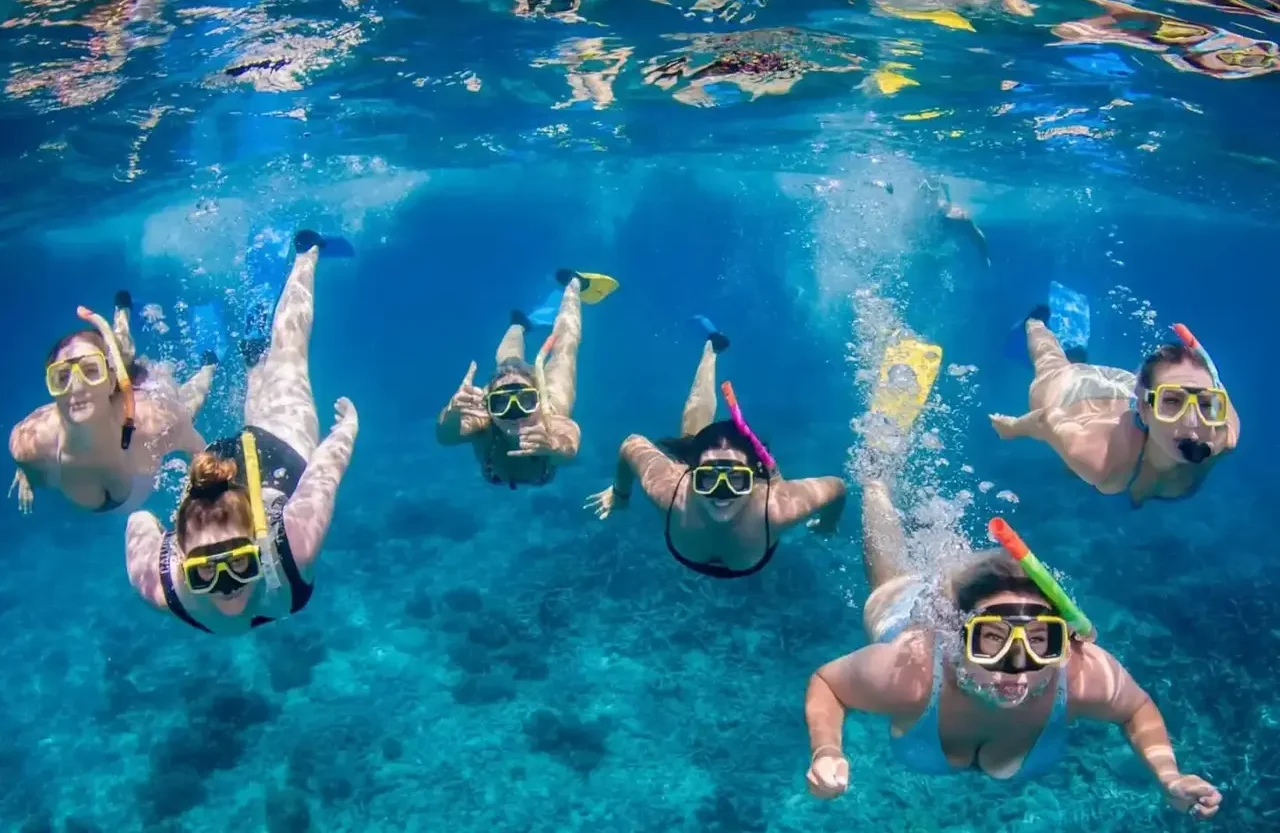
Snorkeling has no such wait, because snorkelers do not breathe compressed gas. The snorkeling trip is a safe last-day option.
When is your last safe dive before your flight home?
Count back from the departure time on your ticket, not from check-in. With an 18-hour interval, a flight at 12:00 means your last dive must end by 18:00 the day before. A late-evening flight gives more room. The table below does the sums for typical departure times.
| Flight departs | Latest end of last dive (12 h, one dive) | Latest end of last dive (18 h, multiple dives) | Latest end of last dive (24 h, cautious) |
|---|---|---|---|
| Saturday 06:00 | Friday 18:00 | Friday 12:00 | Friday 06:00 |
| Saturday 10:00 | Friday 22:00 | Friday 16:00 | Friday 10:00 |
| Saturday 14:00 | Saturday 02:00 | Friday 20:00 | Friday 14:00 |
| Saturday 18:00 | Saturday 06:00 | Saturday 00:00 | Friday 18:00 |
| Saturday 23:30 | Saturday 11:30 | Saturday 05:30 | Friday 23:30 |
The 12, 18 and 24-hour columns come from the DAN and PADI figures above. The clock times are our arithmetic.
A worked example
Say you dive on Thursday and Friday and fly home at 14:00 on Saturday. Because you dived on two days, the 18-hour rule applies. Your Friday dive must end by 20:00 on Friday. A boat day that returns to the marina in the afternoon meets that, but the exact return time depends on the trip, so we confirm it at booking.
Does my dive computer's no-fly time count?
A dive computer's no-fly timer is the computer's own calculation from your actual dives. DAN's flying after diving workshop summary says written guidelines should stay simple unless divers can rely on dive computers. It does not say a computer replaces the 12 and 18-hour minimums.
Computers differ between brands, so read your manual. If your computer shows a longer no-fly time than the table above, the longer wait is the more cautious choice. If the two disagree and you are unsure, ask your guide or a physician before booking your flight.
Can you dive after flying?
Neither DAN page we read for this guide gives a waiting time for diving after a flight. PADI says diving on the first day at your destination is probably not a good idea after a long trip. It advises resting, eating lightly and drinking plenty of fluids first.
DAN Europe lists flights among the causes of dehydration on dive holidays, and dehydration is a risk factor for DCS. Tell the dive team when you landed so they can plan with you.
What are the signs of decompression sickness, and what if something goes wrong?
Decompression sickness occurs when nitrogen absorbed at depth forms bubbles in the blood and tissues. According to DAN, symptoms can start right after surfacing or up to 24 hours later, most often between 15 minutes and 12 hours after the dive. Give 100 percent oxygen and call emergency services.
Symptoms DAN lists
- Unusual fatigue and itchy skin
- Pain in the joints or muscles
- Dizziness, numbness, tingling or shortness of breath
- More serious signs: blotchy rash, weakness or paralysis, confusion, difficulty urinating, a staggering walk or collapse
DAN says delayed treatment can lead to permanent injury, and that oxygen can temporarily hide symptoms, so you still need a medical check if you feel better.
Flying with symptoms and after treatment
Do not fly with symptoms. In DAN Europe's Alert Diver article, flying while symptomatic made Type II DCS 1.6 times more likely and residual symptoms 2.7 times more likely. After recompression treatment, the article says the most commonly recommended delay to flight is three days. Your treating doctor decides.
Where is the nearest chamber?
Emperor Divers says the HyperMed recompression chamber in Hurghada opened in 2007 next to the airport, and that it also treats non-diving conditions. Opening hours, contact numbers and costs are not on that page. Ask us to confirm current details, and use emergency services first if someone shows serious symptoms.
Which other dive safety basics matter on a Hurghada holiday?
Five habits do most of the work: equalise early, ascend slowly, stay hydrated, avoid alcohol around diving and answer the medical form honestly. Each comes from PADI or DAN guidance. None replaces your instructor's briefing or a doctor's advice.
| Basic | What the source says | Source |
|---|---|---|
| Equalising | Equalise often on descent. If your ears hurt, ascend slightly and retry or end the dive. | PADI golden rules |
| Ascent rate | Ascend no faster than 18 m (60 ft) per minute, then make a safety stop of at least 3 minutes at 5 m (15 ft). | PADI golden rules |
| Hydration | Drink water every 15-20 minutes and aim for about 2 litres extra a day. Urine should be clear or light yellow. | DAN Europe |
| Alcohol | DAN says alcohol and diving are not compatible, and alcohol can dehydrate you. | DAN |
The medical form
Every beginner and certified diver fills in a medical questionnaire before diving. According to PADI, if you answer no to every question you can sign and dive. A yes to any relevant question means a physician must sign the evaluation form first. Do this at home before you travel.
Who should you ask if you are not sure?
Ask a physician, ideally one trained in dive medicine, about your own health, medication, past DCS or ear problems. Ask your dive professional about your dive plan and computer. These rules are general guidance, so do not rely on a web page for medical decisions.
How does Divers Trips handle this?
Our full-day diving trip costs €60 per person and includes two guided dives, equipment, tanks and weights, lunch, soft drinks and hotel pickup. Two dives count as multiple dives, so we advise against booking it the day before your flight. Separate environmental or park fees may apply; we confirm any fee after booking.
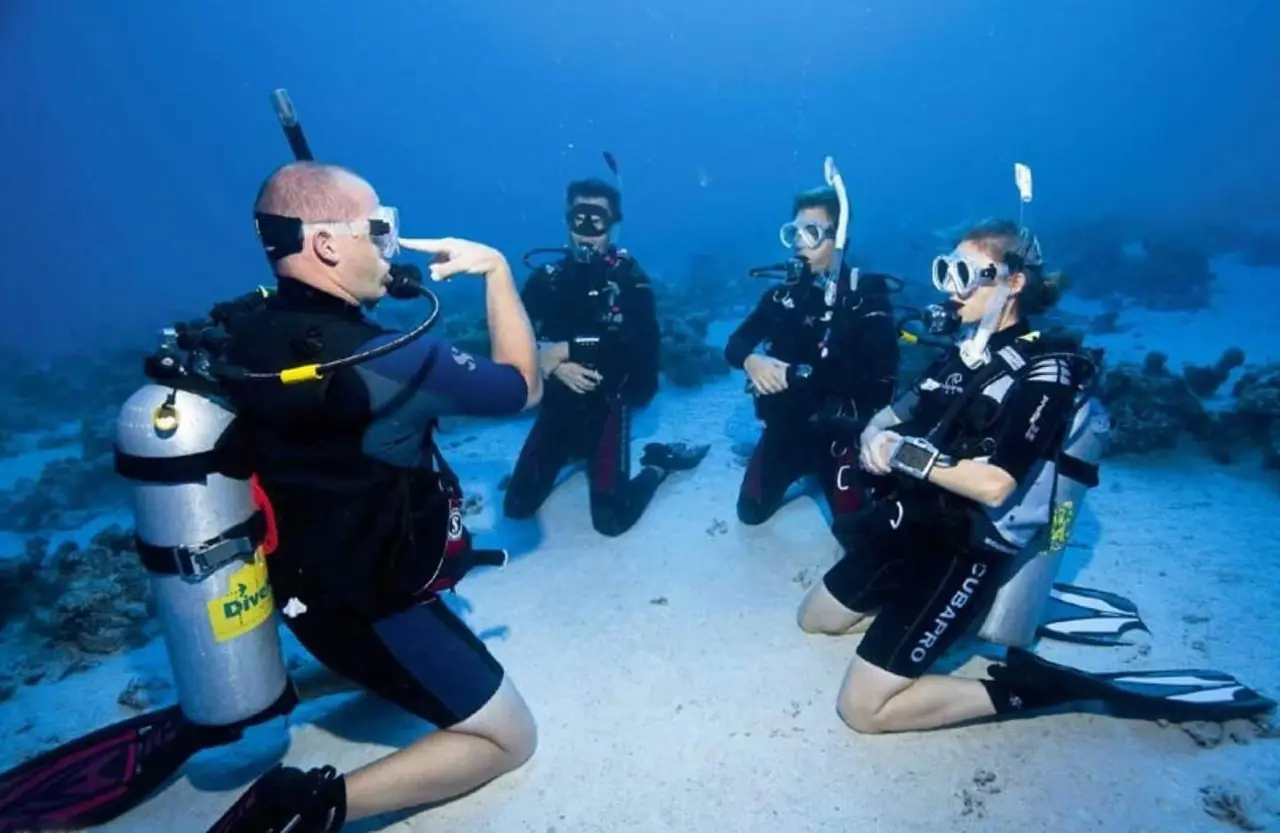
The PADI Open Water course and the private diving trip are priced on request, because the price depends on the package or on the group and boat. For course details see our PADI Open Water guide and the diving in Hurghada page. You can also read the best time to dive guide.
Tell us your flight time when you book or contact us, and we help plan your last dive day.
Sources
- Flying After Diving (DAN Europe, Alert Diver)
- Guidelines for Flying After Diving (DAN)
- Flying After Diving, 2015 study discussion (DAN)
- Flying After Diving (DAN World)
- Altitude and diving (Alert Diver)
- Treating Decompression Sickness (The Bends) (DAN)
- More Water, Less Bubbles (DAN Europe)
- Drinking and Diving: Is it Safe? (DAN)
- 10 Things You Should Never Do Immediately After Diving (PADI)
- The Golden Rules of Scuba Diving (PADI)
- Minimize Risks from Jet Lag (PADI)
- Recompression chamber and diving safety (Emperor Divers)
- Diver Medical Participant Questionnaire (PADI)
Facts last verified: