How hot is Hurghada in July and August?
According to NOAA's 1991-2020 normals, as tabulated on Wikipedia, the average daily high is 37.4°C in July and 37.5°C in August. Average lows are 27.8°C and 28.0°C. Record highs reached 44.5°C and 46.1°C. Humidity averages 45 to 46 percent, and rain is not a factor.
A normal is a 30-year average, so individual days run hotter or cooler. WeatherSpark, which uses NASA MERRA-2 model data, defines the hot season as 26 May to 22 September, when the average high is above 92°F (33°C). It also names August as the hottest month. Our best time to visit Hurghada guide covers the full year, so this page stays on summer.
Why do weather sites disagree about summer heat and UV?
Sites mix different data: station observations, satellite reanalysis models and tourism averages. The July high ranges from 34°C to 42°C across the pages we opened. The UV index is quoted as 8 on some pages and 11+ on another. Read the spread as method differences, not errors (our reading).
| Source (opened 5 Oct 2026) | July / August high | UV index |
|---|---|---|
| NOAA normals via Wikipedia | 37.4 / 37.5°C | Not given |
| climate-zone.com (NOAA station data) | 37 / 38°C | Not given |
| WeatherSpark (NASA MERRA-2 model) | 96°F (about 35.6°C) in both | Not given |
| bestdateweather.com (ERA5, 10 years) | Page shows 28-35°C and 29-35°C | 8 |
| Vialala | 35-42°C (July) | 8 |
| weather2travel.com | 34°C (July) | 11+ |
We anchor on NOAA because it is station-based and gives both months. For UV, the WHO says the advice at 8 and above is the same: avoid being outside during midday hours, seek shade, and wear a shirt, sunscreen and a hat. The Met Office page showed a UV index of 8 for Hurghada on 5 October 2026, so summer should not be lower.
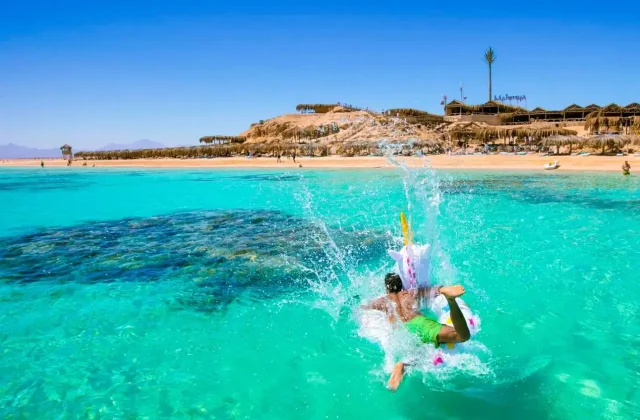
How warm is the sea in July and August, and do you need a wetsuit?
According to seatemperature.info, which uses ten years of satellite and in-situ data, the sea averages 28.3°C in July and 29.1°C in August. The daily range is 25.7 to 30.9°C in July and 27.3 to 31.2°C in August. The PADI blog says a shorty or rash vest is enough at about 28°C.
A rash vest is a thin, close-fitting top that protects skin from sun and abrasion. For snorkelers, this matters more as sun cover than as warmth. We have not confirmed whether we rent or sell rash vests, so ask us before your trip. WeatherSpark gives mean wind of 13.7 mph in July and 14.5 mph in August, mostly from the north.
What is the best time of day for a boat trip, a rest and the desert?
Put the sea in the morning, rest around midday and go to the desert near sunset. The NHS advises avoiding the sun between 11am and 3pm. The WHO recommends sun protection during the four hours around solar noon. Our calculation puts solar noon near 12:50pm in mid-July, so that window is about 10:50am to 2:50pm.
| Time of day | Best activity | Why |
|---|---|---|
| Morning, until about 11am | Boat departure, snorkel stop or glass-boat reef viewing | The sun is lower and you are out before the NHS 11am-3pm window |
| About 11am to 3pm | Lunch and shade on board a full-day trip, or the hotel pool and a cool room after a half-day trip | NHS and WHO both single out midday for avoiding sun |
| Mid to late afternoon | Easy time: pool, shower, snack and a drink | Time to recover before an evening outing |
| Late afternoon to sunset | Mountain safari with an evening departure | Sunset is 7:43pm on 1 July and 7:06pm on 31 August, so the desert is seen in softer light |
Sunset times come from sunrise-sunset.org's 2026 tables: 7:41pm on 15 July, 7:34pm on 31 July, 7:33pm on 1 August and 7:22pm on 15 August. Pickup and departure times depend on the program and are confirmed after booking.
How do you avoid sunburn and heat illness on the water?
Follow public-health guidance: the NHS says to drink more cold drinks, wear light, loose clothing and avoid the sun from 11am to 3pm. CDC says to carry a water bottle and refill it. The NHS advises at least factor 30 sunscreen with at least 4-star UVA protection. We give no litre figure, because none of these pages sets one.
Hydration
The NHS says to drink enough that your pee is a pale colour. CDC says light yellow or clear usually means you are drinking enough. Both treat dark urine as a warning sign. The NHS also advises limiting alcohol in hot weather.
Sunscreen and cover
The NHS says adults need about 6 to 8 teaspoons to cover the whole body. Reapply after swimming and sweating, or every 2 hours. It also warns that water washes sunscreen off and reflects UV. Bring a wide-brimmed hat, a long-sleeved top and sunglasses.
Warning signs
Heat exhaustion is when the body overheats and loses water and salt. The NHS lists tiredness, dizziness, headache, nausea, heavy sweating with pale, clammy skin, and cramps. It says to move the person somewhere cool and give fluids. Heatstroke is a medical emergency: the NHS lists hot skin without sweating, confusion and fast breathing. Tell the crew straight away.
Which trips suit the heat, and which need careful timing?
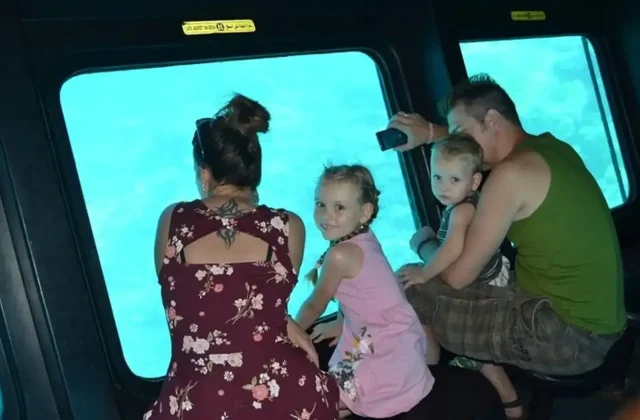
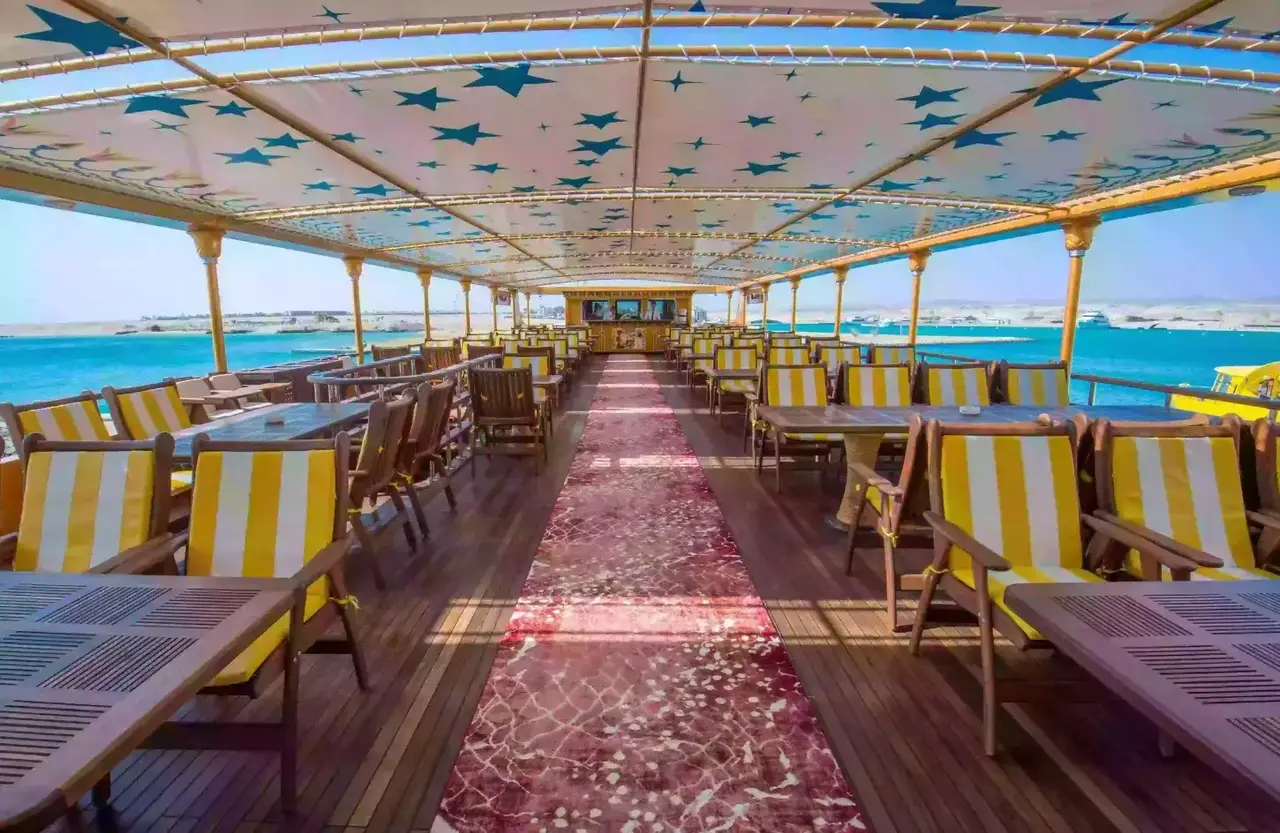
Morning sea trips and the shorter reef-viewing trips suit summer best, while a safari needs an evening slot. The Orange Bay Island Trip is a full day with lunch on board. The glass boat and semi-submarine keeps you out of the water.
- Orange Bay (€45): hotel pickup in the morning, a snorkel stop, beach time and lunch on board with soft drinks. Ask us about shade and fresh water on your boat.
- Glass boat or semi-submarine (from €30): the reef viewed through glass, and you stay dry. Duration is confirmed on booking. See our glass boat vs semi-submarine comparison.
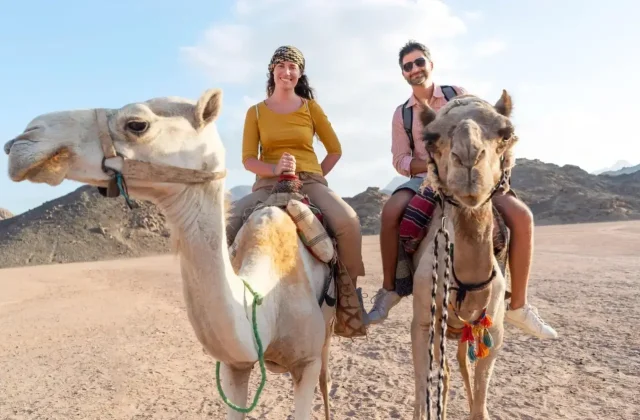
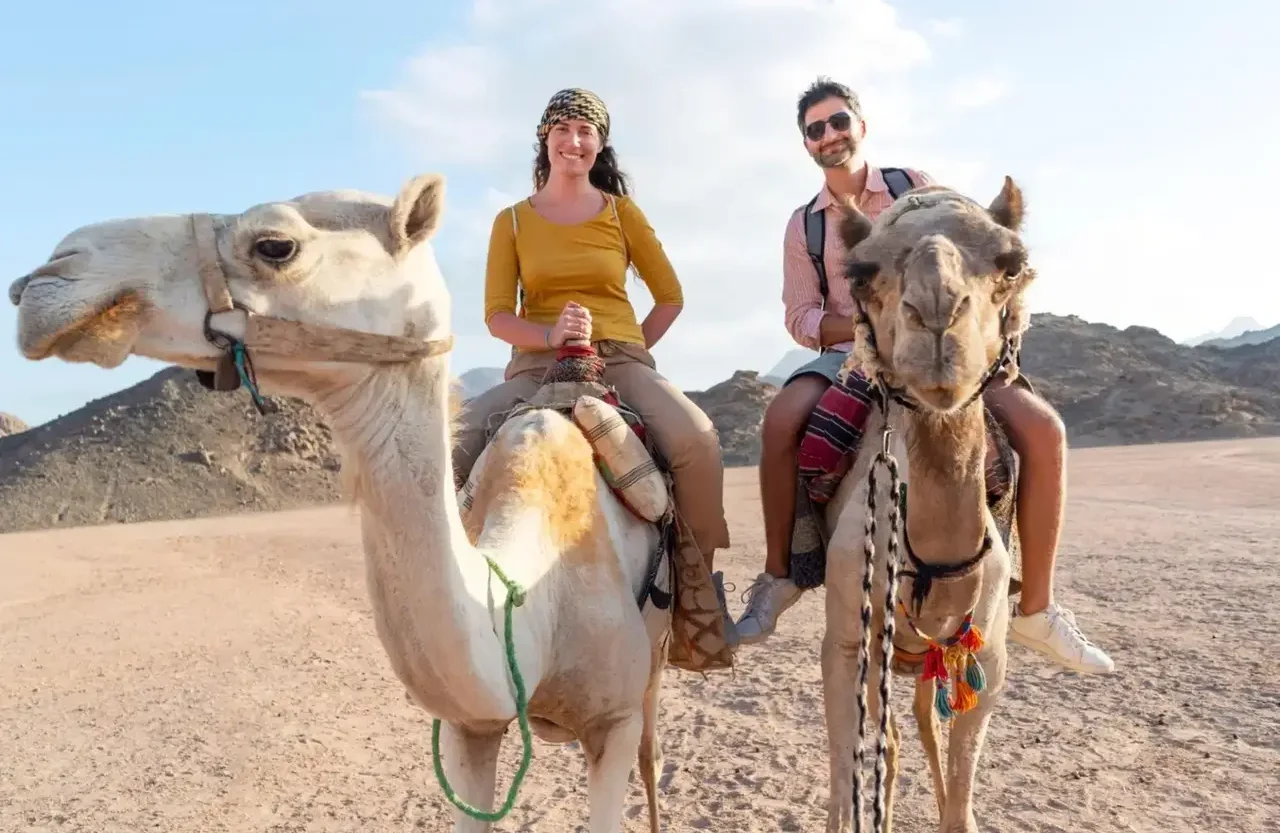
- Mountain Safari (€35): a half-day or evening trip with a camel ride and Bedouin tea. Choose an evening departure for sunset; pickup time is confirmed after booking. See desert safaris compared.
- Jungle Water Park (€50): full day with slides, pools and kids' areas. It is outdoors, so the sun rules above still apply.
Who should take extra care in the heat?
Children, older people and people with long-term conditions should take extra care. The NHS says they are more at risk and should be checked on. CDC lists people aged 65 or older, and infants and young children, as higher-risk groups. The NHS says babies, children and older adults are more at risk of dehydration.
The NHS also advises keeping children under 6 months out of direct strong sunlight. Give us ages and health needs when you book, and we will suggest the right trip. For families, see our Hurghada with kids guide.
How does Divers Trips handle summer days?
We run the same trips all year, and the itinerary and stops can change with weather and sea conditions, according to our trip pages. We confirm pickup times, program and any separate environmental or park fees after booking. We have no fixed summer departure or return times to quote, so we confirm them for your date.
Tell us your hotel, dates and who is travelling on the booking page or contact us. Browse snorkeling and island trips if you want more sea options. Our FAQ page answers other common questions.
Sources
- Wikipedia: Hurghada, climate table (NOAA 1991-2020 normals)
- climate-zone.com: Hurghada climate normals 1991-2020
- WeatherSpark: Average Weather in Hurghada (NASA MERRA-2)
- seatemperature.info: Hurghada monthly sea water temperature
- bestdateweather.com: Hurghada weather in July (ERA5, Open-Meteo)
- bestdateweather.com: Hurghada weather in August (ERA5, Open-Meteo)
- Vialala: Hurghada in July
- weather2travel.com: Hurghada weather in July
- Met Office: Hurghada weather and UV (read 5 Oct 2026)
- sunrise-sunset.org: Hurghada, July 2026
- sunrise-sunset.org: Hurghada, August 2026
- NHS: Heat exhaustion and heatstroke
- NHS: Sunscreen and sun safety
- NHS: Dehydration
- CDC: About heat and health
- WHO: The ultraviolet (UV) index
- PADI Blog: Five things to consider before your dive trip to the Red Sea
Facts last verified: