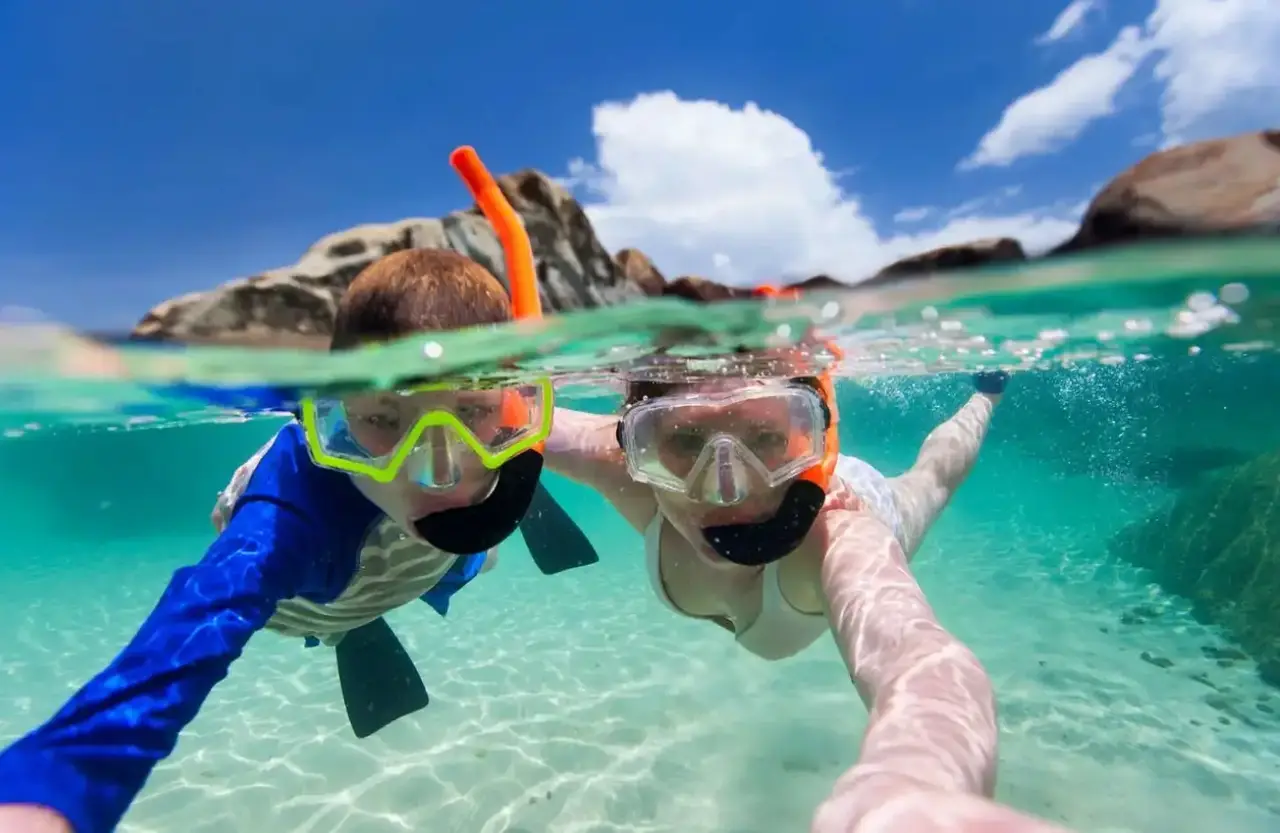
Can non-swimmers snorkel in Hurghada?
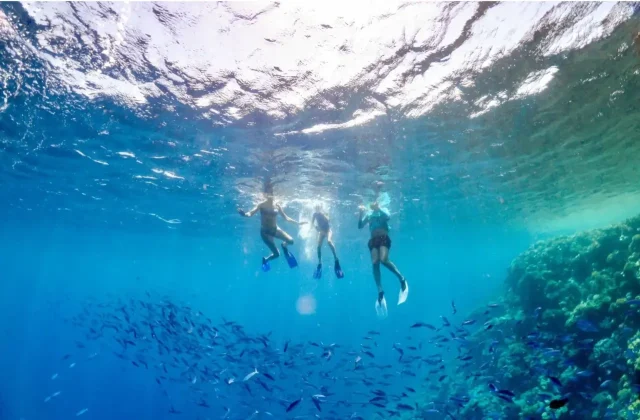
Yes, with conditions. Snorkeling is mostly floating, and our trip pages say a non-swimmer can use a life vest or float and stay close to the guide. You must tell the guide before you enter the water. If you panic in water, choose a dry option instead.
A flotation aid is a vest or float that keeps you at the surface without effort. The American Academy of Pediatrics (AAP, drowning prevention recommendations, 18 May 2026) says young children near water, non-swimmers and people riding on boats should wear Coast Guard-approved life jackets. That is a US standard, so ask us what is on your boat.
The WHO fact sheet (1 May 2026) says travelling on water without appropriate safety equipment can increase drowning risk.

What age can kids snorkel on a boat trip?
There is no single legal or universal age. A Norwegian safety authority (DSB) says children under 7 should not use a snorkel. A snorkeling guide site says about five to six is manageable for water-confident children. On our trips, children are welcome and the price depends on age.
A readiness checklist (guidance, not rules)
These points come from the sources we opened. They are general guidance, not requirements we set, and the boat operator's safety rules always apply.
- Comfortable in water. The snorkelaroundtheworld.com guide says comfort in the water matters more than age.
- Snorkel size. DSB says child snorkels are about 1 to 1.2 dl in volume and at most 30 cm long, to avoid rebreathing stale air. Children over 50 kg can use adult snorkels.
- An adult within reach. The AAP calls this "touch supervision" for infants, toddlers and weak swimmers. DSB suggests parents test the snorkel with the child.
- Not tired or unwell. The same guide advises against snorkeling when a child is sick or tired.
- Swim lessons. The AAP says to start classes after the first birthday, and finds no evidence that infant lessons reduce drowning.
What safety equipment and supervision should you expect?
On our snorkeling trips, the data lists snorkeling equipment and a professional snorkeling guide as included. Our pages say the guide stays close to beginners and that non-swimmers can use a life vest or float. Some guides tow a ring float to hold. Ask us to confirm child sizes.
We do not publish a guide-to-guest ratio or a child vest size range, so we do not state one. Ask us before you book.
Mask, snorkel and vest basics
- Practise breathing through the snorkel next to the boat before swimming out, as our snorkeling page advises.
- A soft silicone mask with tempered glass is recommended over a full-face mask for children by the snorkelaroundtheworld.com guide.
- A vest helps when a child tires, but that guide says it is not life-saving equipment.
- Never let a child stand on the reef. Coral is alive and cuts heal badly.
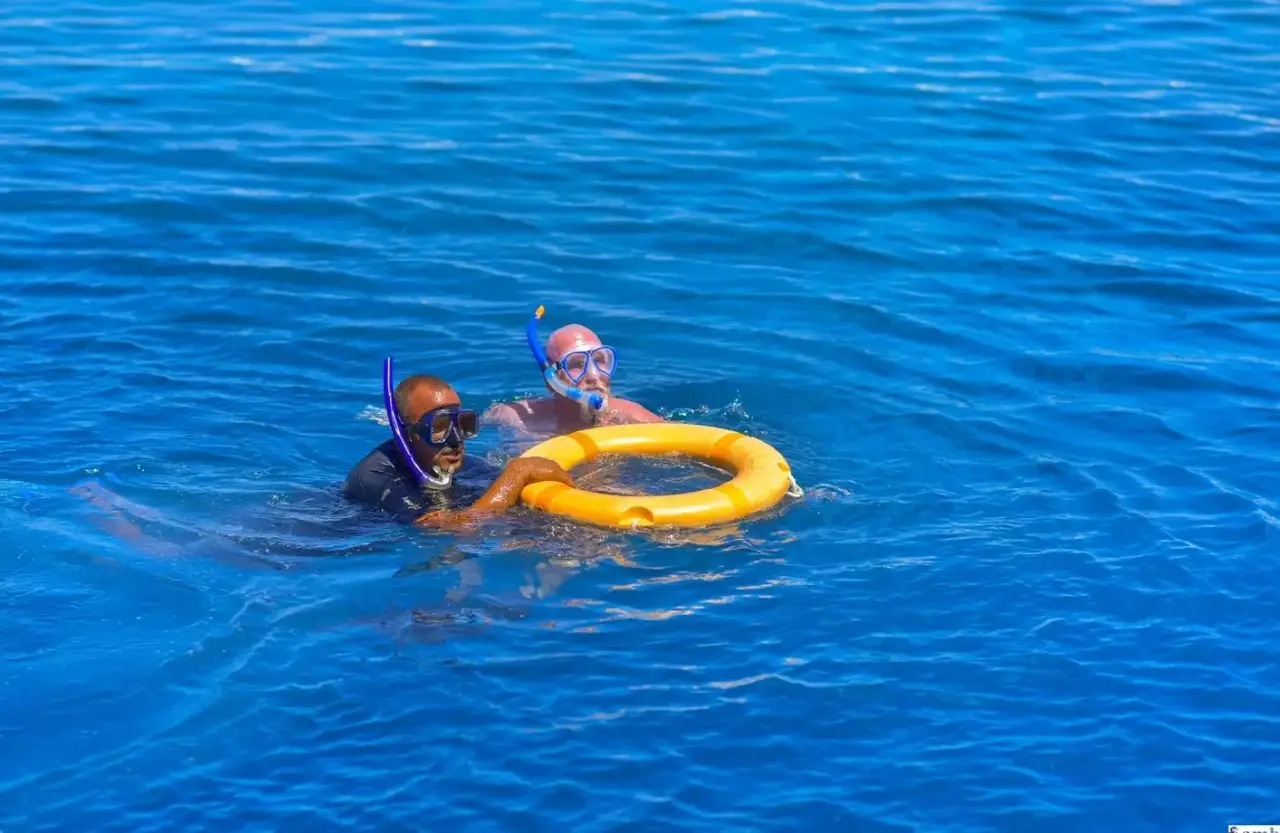
Which trip suits which child age and swimming level?
Our data does not set exact age limits for any sea trip. It says children are welcome, and child prices depend on age and are quoted on request. The table shows only what the trip pages state. Tell us each child's age and swimming level when you ask.
| Trip | Adult price | Children | Non-swimmers (per our data) |
|---|---|---|---|
| Orange Bay | €45 per person | Welcome; child price on request, depends on age | Yes. Much of the beach water is shallow enough to stand in; use a vest or float at the snorkel stop |
| Paradise Island | €45 per person | Welcome; child price on request, depends on age | Say so on board to use a flotation aid and stay close to the guide |
| Snorkeling trip | €45 per person | Welcome, subject to the operator's safety requirements | Vest or float, stay close to the guide |
| Giftun Island | €45 per person | Welcome; child price on request | Beginner snorkelers listed as suited; ask us about swimming level |
| Glass boat or semi-submarine | From €30 | Welcome; rates and age rules confirmed at booking | Yes. You stay dry inside the vessel |
| Grand Aquarium | On request | Child ticket depends on age | Not a sea trip; no swimming |
Which island is best for kids and beginners?
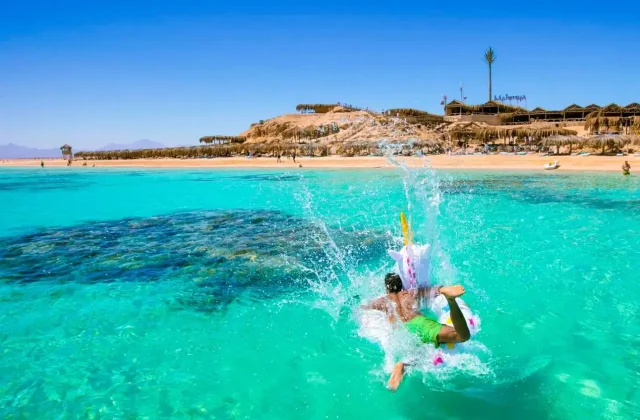
For small children and nervous swimmers, our pages point to Orange Bay, where the water stays shallow a long way out. Paradise Island suits a livelier beach day. For the full comparison, read our island trip guide.
Every beach trip has a snorkel stop before the sand. Ask us how a child who skips the stop is looked after on your date.
What can non-swimmers do instead of snorkeling?
Three options keep the Red Sea in your day without a mask. Spend the island's beach time in the shallows, take a glass boat or semi-submarine, or visit an aquarium. Our glass-boat and semi-submarine trip starts from €30 and keeps you dry.
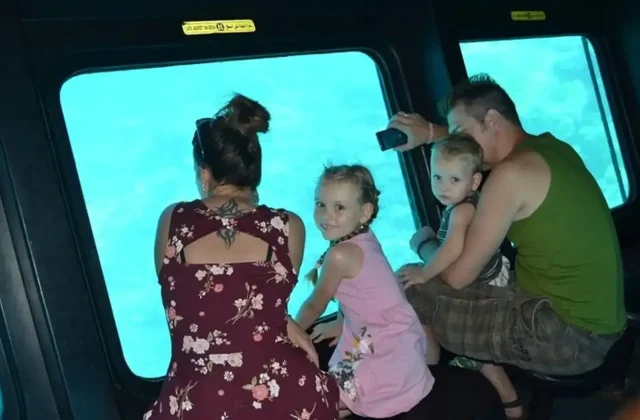
- Glass-bottom boat: glass panels in the hull show the reef below an open deck. We call it the easier choice for toddlers and claustrophobic guests.
- Semi-submarine: a viewing cabin below the waterline with side windows. It does not dive, and the enclosed cabin may not suit people with claustrophobia.
- Grand Aquarium: mostly indoors, for a rough-sea or hot day.
Children must stay with an adult on the glass boat. Some glass-boat trips add an optional snorkel stop. We confirm this when you book.

How do you handle seasickness, sun and heat?
Choose the middle of the boat, watch the horizon, and avoid heavy meals before sailing, says the NHS. Use at least factor 30 sunscreen with 4-star UVA protection and reapply straight after water. Keep babies under six months out of direct strong sun. Bring hats and rash vests.
Motion sickness
The NHS also suggests fresh air and ginger, and says not to read or use devices. Dissolvable tablets exist for children, and patches suit children over 10. Ask a pharmacist, because we cannot give medical advice.
Sun and heat
The NHS names 11am to 3pm as the strongest sun in UK summer; take shade then. Our trip pages list a hat, sunglasses, sunscreen and a T-shirt or rash vest for the water. Shade is limited on the water, according to our Paradise Island page.
What should you tell the guide?
Tell the guide, before anyone enters the water, who cannot swim, each child's age, any fear of water, past seasickness, and medical conditions. Our pages say the guide stays close to beginners. They can only do that if they know who needs it.
- Who cannot swim or is nervous.
- Each child's age and whether they have snorkeled before.
- If a child gets cold or tired quickly.
- Any medical condition or allergy.
When should you skip the snorkel?
Skip it if a child is unwell, tired, cold, very scared, or too young to manage a snorkel. Skip it if the sea is rough, the vest does not fit, or no adult can stay within reach. Our trip pages say the itinerary can change with sea conditions, and safety comes first.
Skipping is not failing. A beach, a glass boat or an aquarium keeps the day good. For the wider picture on safety in Hurghada, see our tourist safety guide.
How does Divers Trips handle this?
Orange Bay, Paradise Island and the snorkeling trip cost €45 per person and include hotel pickup, equipment, a professional guide, lunch and soft drinks. Child prices are on request and depend on age. The glass boat starts from €30. Message us your children's ages and swimming levels, then see boat trip prices or our booking policy.
Separate environmental or park fees may apply; we confirm any fee after booking. This article is general guidance, not medical or safety advice for your family, and the boat captain's instructions always come first.
Sources
- American Academy of Pediatrics (HealthyChildren.org): AAP releases updated drowning prevention recommendations (18 May 2026)
- WHO: Drowning fact sheet (1 May 2026)
- DSB (Norwegian Directorate for Civil Protection): Children under 7 years old should not use a snorkel
- NHS: Sunscreen and sun safety
- NHS: Motion sickness
- Snorkel Around the World: Snorkeling with kids
Facts last verified: